

A soda can may look like a simple aluminum container, but its dimensions matter when you’re comparing everyday objects, organizing a refrigerator, designing product packaging, or choosing a can holder. Although most people recognize a standard soda can immediately, fewer know its exact height, diameter, circumference, or how its measurements compare with other beverage containers.
In the United States, the most familiar soda can holds 12 US fluid ounces (355 milliliters). It typically stands about 4.83 inches tall and measures 2.6 inches across the main body. These dimensions provide a useful reference for everyday calculations, although individual cans can vary by brand and design.
This guide explains standard soda can dimensions in inches, centimeters, and millimeters. It also covers mini cans, slim cans, tall beverage cans, circumference calculations, practical comparisons, and tips for measuring a can accurately.
📏 Standard Soda Can Dimensions at a Glance
A standard 12-ounce soda can is commonly used for soft drinks such as cola, lemon-lime soda, and flavored sparkling beverages. Its cylindrical body makes it relatively easy to measure and compare with other objects.
Here are the approximate dimensions of a typical US soda can.
| Measurement | Inches | Centimeters | Millimeters |
|---|---|---|---|
| Height | 4.83 in | 12.27 cm | 122.7 mm |
| Body diameter | 2.60 in | 6.60 cm | 66 mm |
| Radius | 1.30 in | 3.30 cm | 33 mm |
| Circumference | 8.17 in | 20.75 cm | 207.5 mm |
| Capacity | 12 US fl oz | 355 mL | 355 mL |
These figures are approximate reference measurements rather than universal specifications. A can’s top rim, lid, and bottom profile differ from its straight cylindrical body, so measurements may change depending on where you place a ruler.
Quick answer: A typical standard soda can is approximately 4.83 inches tall, 2.6 inches wide across its body, and holds 12 fluid ounces.
🥤 How Tall Is a Standard Soda Can?

A standard 12-ounce soda can is approximately 4.83 inches tall, equivalent to about 12.27 centimeters.
That makes it slightly shorter than five inches. Its compact height allows it to fit into many refrigerator shelves, beverage multipacks, and storage organizers designed for conventional cans.
The total height includes the top and bottom ends. It does not refer only to the straight aluminum wall, because the metal curves inward near the top and bottom.
Why Soda Can Height Matters
Knowing the height is useful in several everyday situations:
- Refrigerator storage: Check whether a can fits beneath a shelf or inside a dispenser.
- Packaging design: Determine how tall a carton or shipping compartment needs to be.
- Cup holders: Check whether a can sits securely without extending too far above the holder.
- DIY projects: Plan storage racks, display stands, or custom containers.
- Product photography: Keep the proportions of cans consistent when arranging a display.
If you need a precise fit, measure the actual can rather than relying entirely on the typical 4.83-inch figure. Some beverage containers use different proportions even when they hold the same amount of liquid.
📐 What Is the Diameter of a Soda Can?

The body diameter of a standard soda can is approximately 2.6 inches, or 6.6 centimeters.
Diameter measures the distance across a circle through its center. For a soda can, it is usually measured across the main cylindrical section, not diagonally across the top rim or the shaped bottom.
This measurement is especially important when selecting a circular holder, designing a storage slot, or calculating how much shelf width several cans will occupy.
For example, a holder with an internal diameter of exactly 2.6 inches might be too tight. Manufacturing tolerances, the holder’s material, and the can’s actual dimensions can affect the fit. A little additional clearance makes insertion and removal easier.
Does the Top Have the Same Diameter as the Body?
Not necessarily. The top of a soda can includes a shaped shoulder, rim, lid, and opening. These features do not have the same dimensions as the main cylindrical body.
The bottom also has a recessed profile that differs from the sidewall. Consequently, a measurement taken across the lid may not match the diameter of the body.
When measuring a can for a holder, focus on the widest section that must pass through the opening.
🔄 What Is the Circumference of a Soda Can?

The circumference is the distance around the outside of a circular object. For a standard soda can with a body diameter of 2.6 inches, the circumference is approximately 8.17 inches, or 20.75 centimeters.
You can calculate circumference with this formula:
\[ C=\pi d \]
Here:
- \(C\) represents circumference.
- \(d\) represents diameter.
- \(\pi\) is approximately 3.14159.
For a can with a diameter of 2.6 inches:
\[ C=3.14159\times2.6\approx8.17 \]
The result is approximately 8.17 inches.
Why Circumference Is Useful
Circumference is particularly helpful when estimating the size of a wraparound label. If you know the distance around the can, you have a starting point for determining how wide the label needs to be.
However, the final label width may differ because the design might require overlap, an adhesive margin, or a small gap. You should also measure the straight body section to determine the usable label height.
Circumference can also help with craft projects, custom sleeves, and decorative wraps. For a precise result, measure the actual can because its body may not be perfectly uniform across its entire height.
📦 Soda Can Dimensions by Size and Type
Not every soda can has the same shape. Manufacturers produce shorter cans, slim cans, taller cans, and larger containers to accommodate different serving sizes and product designs.
The following table provides approximate measurements for common beverage can formats. Actual dimensions vary by manufacturer, so use these figures as general guidelines.
| Soda can type | Capacity | Approximate height | Approximate body diameter |
|---|---|---|---|
| Mini can | 7.5 fl oz (222 mL) | 3.8–4.2 inches | Varies by design |
| Standard can | 12 fl oz (355 mL) | 4.83 inches | 2.60 inches |
| Slim can | 12 fl oz (355 mL) | 6.1–6.6 inches | 2.25–2.3 inches |
| Tall can | 16 fl oz (473 mL) | Around 6.2 inches | Often around 2.6 inches |
| Large can | 24 fl oz (710 mL) | Around 7.4 inches | Often around 2.6 inches |
These dimensions are estimates, not guaranteed specifications for every product. In particular, slim cans can have different proportions, and larger capacities do not always translate into a predictable height.
1. Mini Soda Can Dimensions
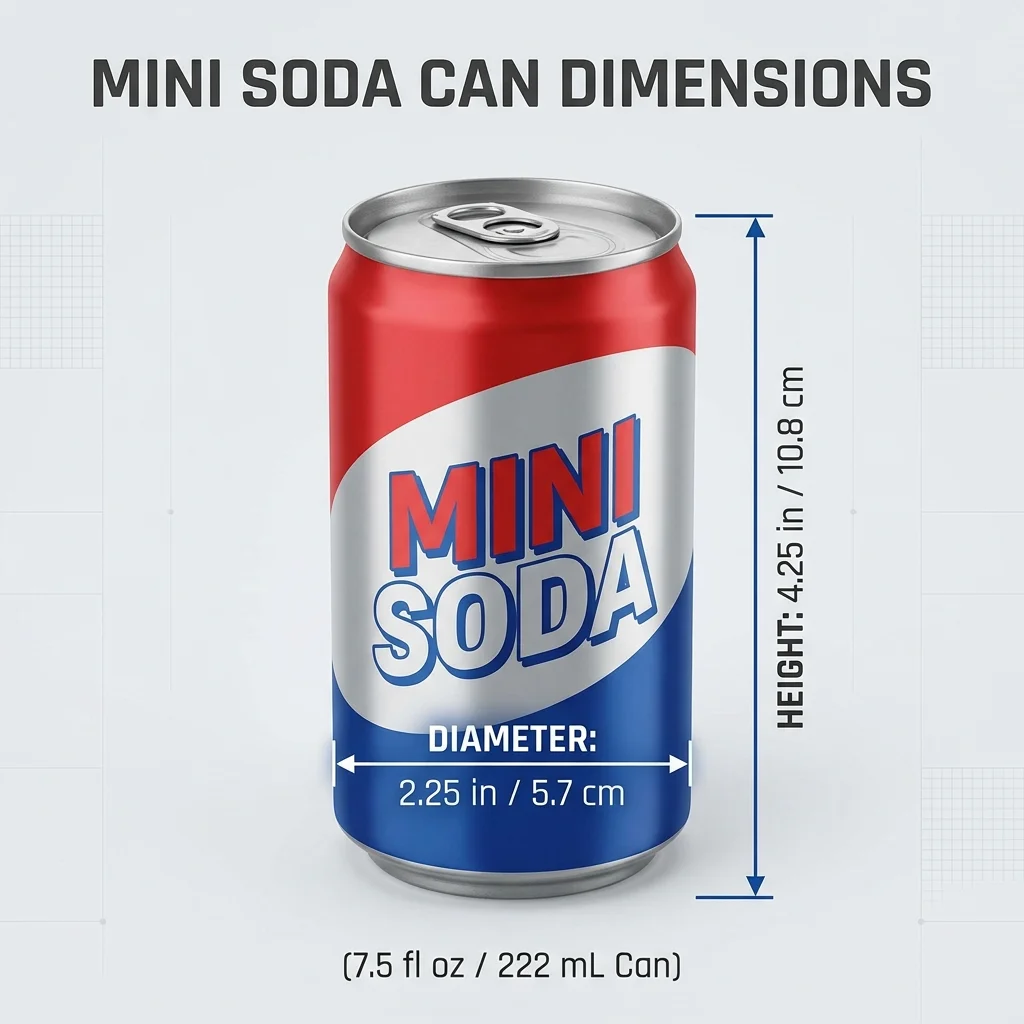
Mini soda cans commonly hold 7.5 US fluid ounces, equivalent to approximately 222 milliliters. Some other small beverage cans use different capacities and dimensions.
These compact containers are popular with people who prefer a smaller serving. They are also useful for parties, lunch portions, and situations where a full-size can would be unnecessary.
A mini can may be shorter than a standard can, but its diameter depends on the particular design. Some retain a familiar can width, while others use a narrower body.
Common uses include:
- Smaller soft-drink servings
- Lunches and snacks
- Party refreshments
- Portion-controlled beverages
- Compact beverage displays
If you’re shopping for a mini-can organizer, check the actual height and diameter rather than assuming all small cans share the same measurements.
2. Standard 12-Ounce Soda Can Dimensions
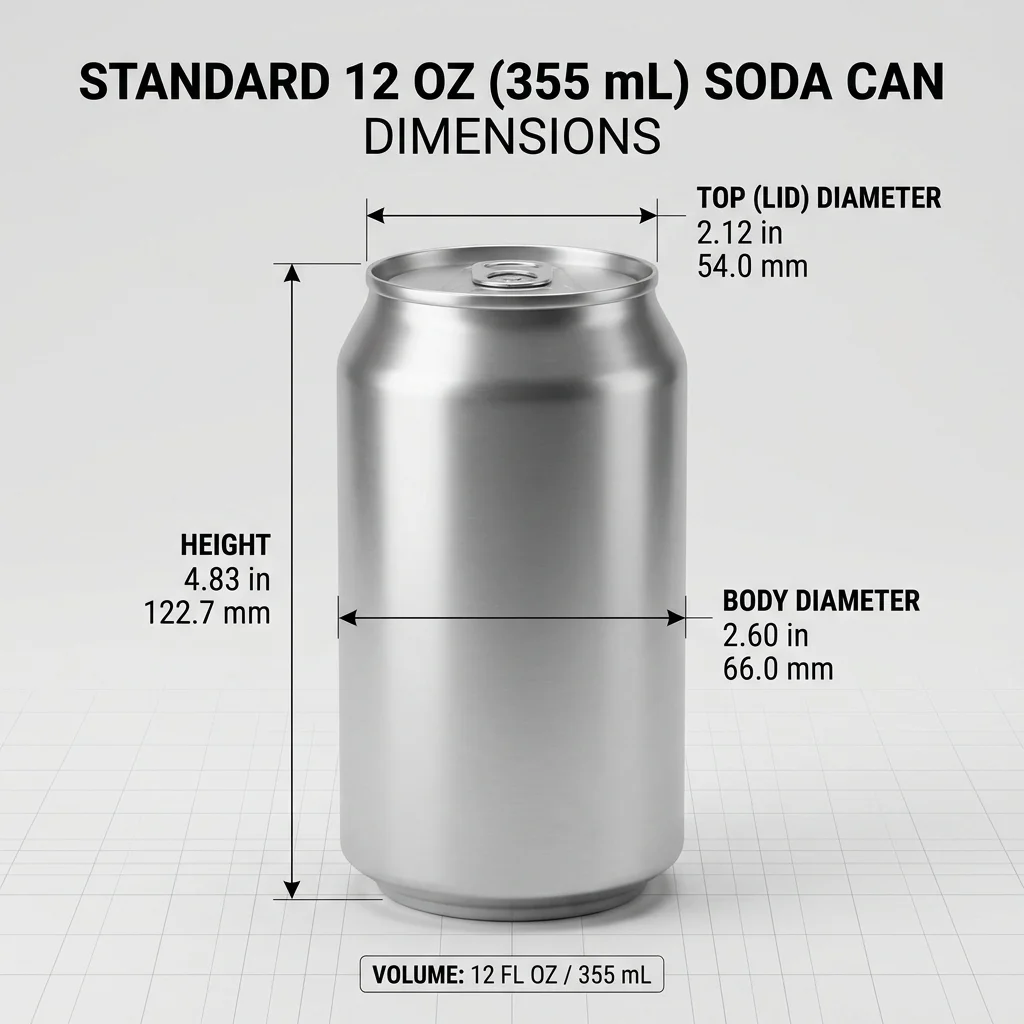
The standard 12-ounce can is one of the most recognizable beverage containers in the United States.
Its approximate dimensions are:
- Height: 4.83 inches
- Body diameter: 2.60 inches
- Radius: 1.30 inches
- Circumference: 8.17 inches
- Capacity: 12 US fluid ounces, or about 355 milliliters
This size is widely used for carbonated soft drinks and other beverages. Because it is so familiar, it provides a practical reference when estimating the dimensions of containers or comparing everyday objects.
Standard cans are also convenient for multipack packaging. Their relatively consistent shape makes it easier to arrange them in rows and design storage compartments around them.
However, even if two cans hold 12 ounces, their external dimensions may differ. A slim 12-ounce can, for example, is usually taller and narrower than a traditional can.
3. Slim Soda Can Dimensions
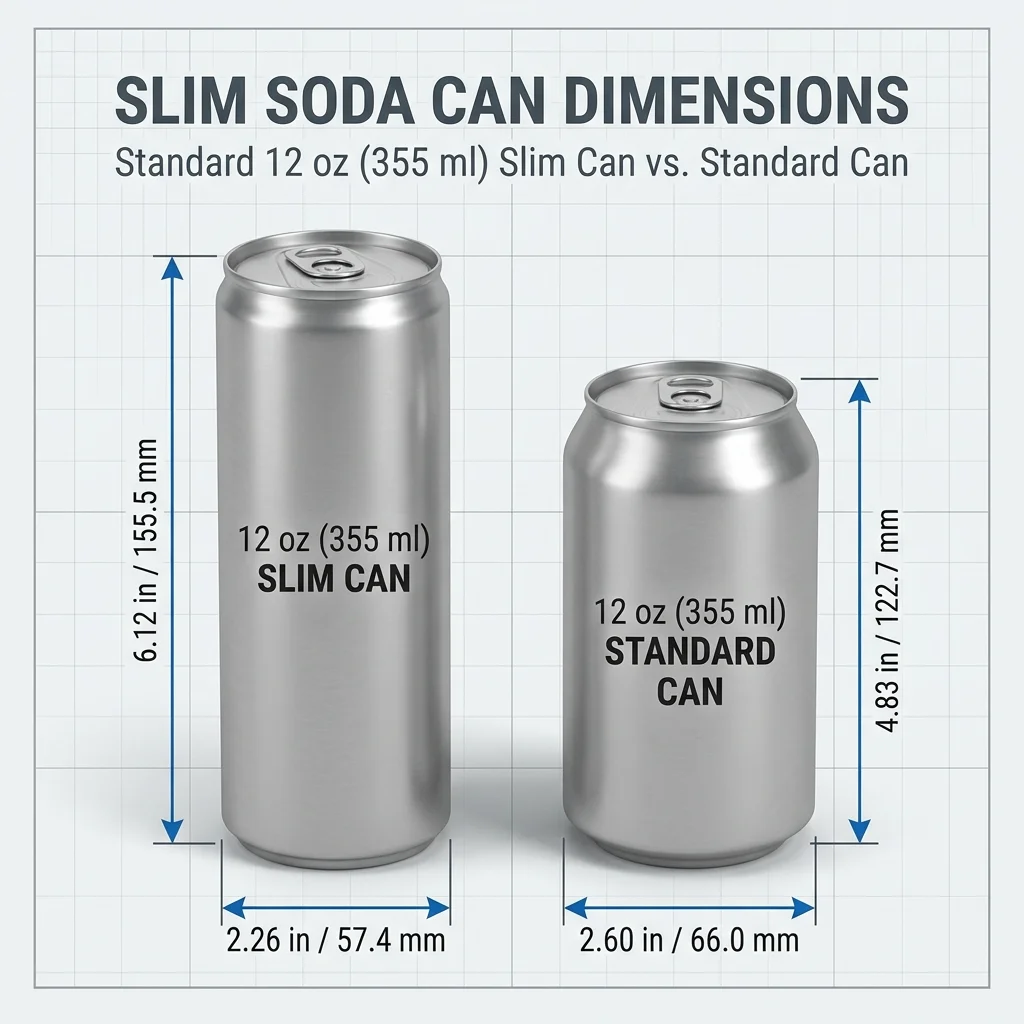
Slim soda cans have a taller, narrower appearance than standard cans. They are frequently used for energy drinks, sparkling water, flavored beverages, and specialty drinks.
A slim can holding 12 fluid ounces may stand approximately 6.1 to 6.6 inches tall, with a body diameter around 2.25 to 2.3 inches. These figures vary by manufacturer.
The main advantage of the slim design is its narrow profile. It can provide a distinctive appearance and may fit in certain narrow storage spaces. However, its taller shape can make it unsuitable for organizers designed specifically for traditional cans.
Before choosing a cup holder or dispenser, consider both the internal width and the available height. A slim can may fit through a narrow opening but still be too tall for the space above it.
4. Tall 16-Ounce Beverage Can Dimensions
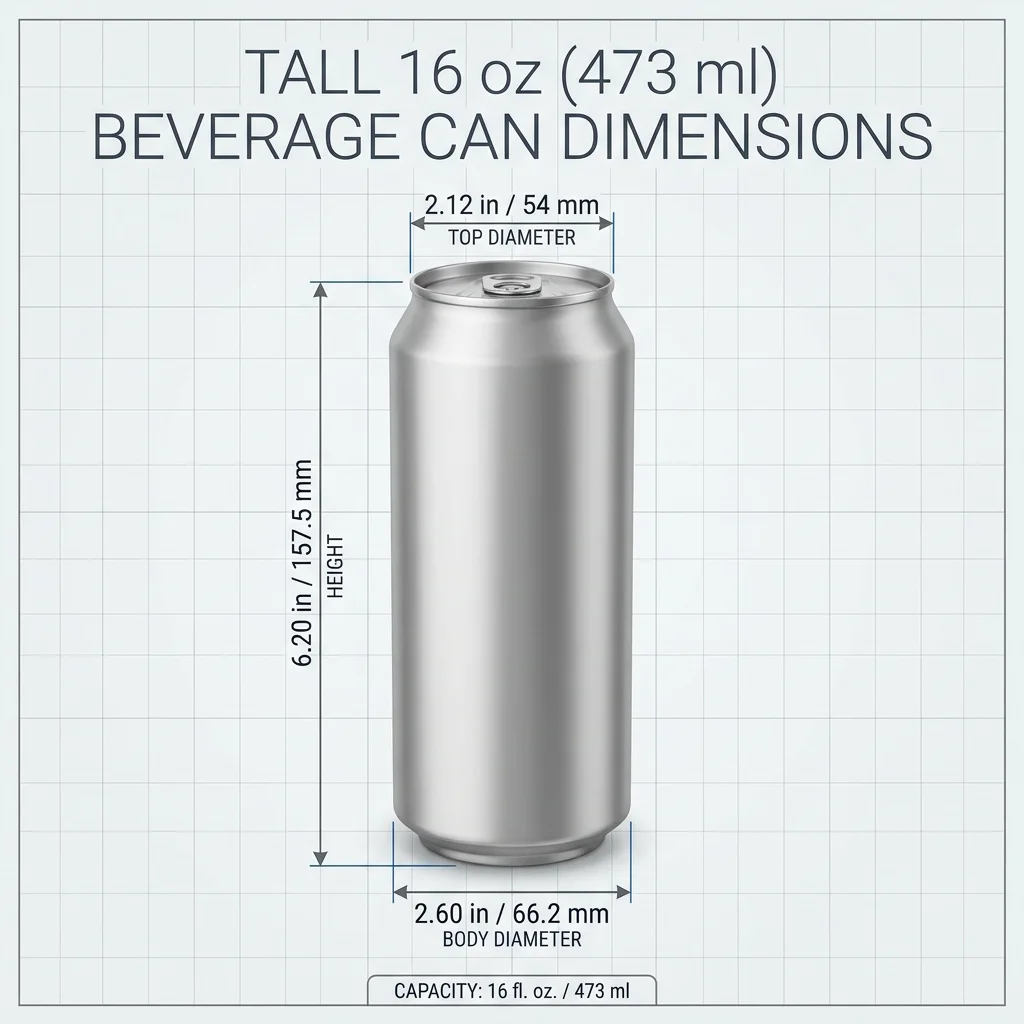
A 16-ounce beverage can holds approximately 473 milliliters. Many cans of this capacity stand around 6.2 inches tall, although the precise dimensions depend on the product.
These containers are commonly associated with larger energy-drink servings and other beverages. Some have a traditional cylindrical profile, while others use taller or narrower shapes.
The additional capacity can be useful when a larger serving is preferred. From a storage perspective, however, a 16-ounce can may require more vertical clearance than a standard 12-ounce can.
If you’re planning a refrigerator shelf or custom holder, check the can’s listed dimensions. Capacity alone does not guarantee a particular height or diameter.
5. Large 24-Ounce Beverage Can Dimensions
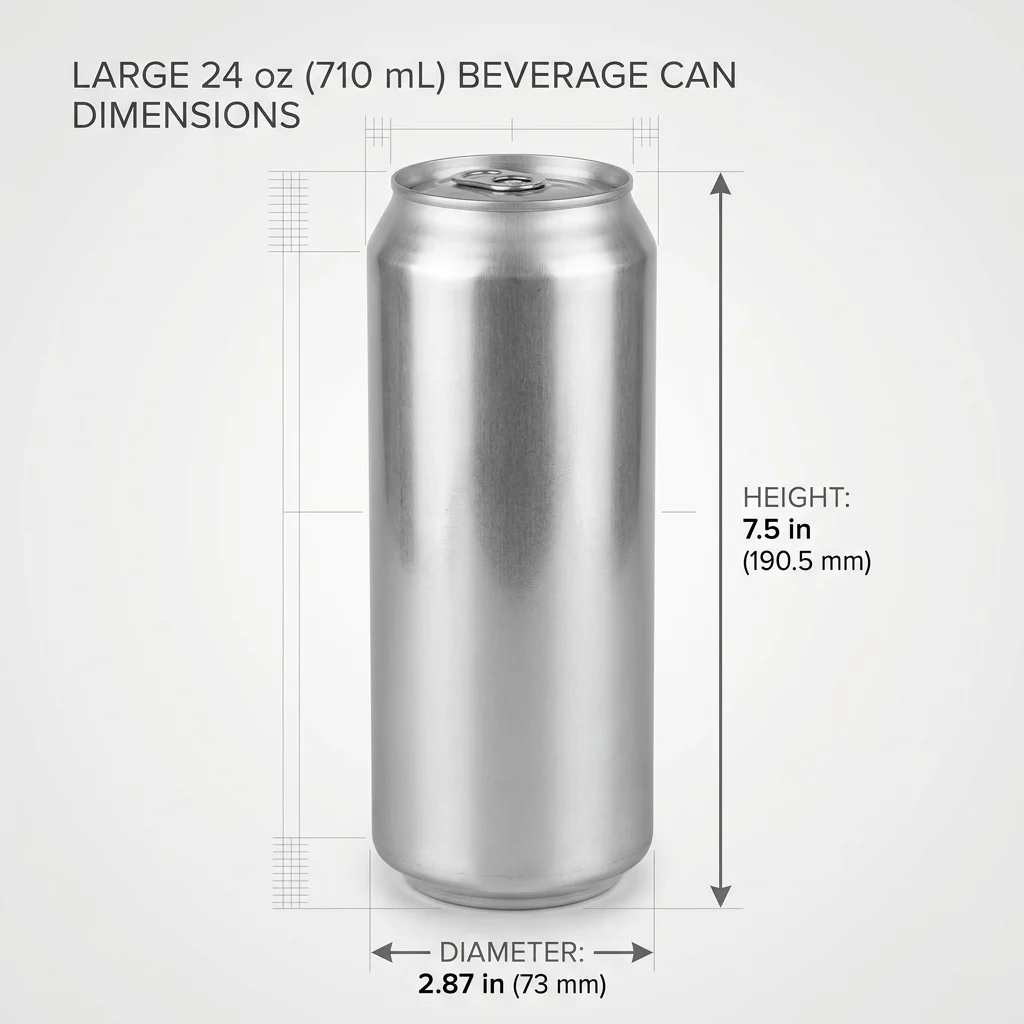
A 24-ounce can contains approximately 710 milliliters. Some containers of this size measure around 7.4 inches tall, but designs can vary.
Large cans are useful for bigger servings and products marketed in single-container formats. Their greater volume usually requires a taller body, a wider body, or a combination of both.
Do not assume every 24-ounce container is the same height. If you’re designing packaging, a display, or a storage rack, use the manufacturer’s specifications or measure a sample can before finalizing your design.
📏 Soda Can Dimensions in Inches, Centimeters, and Millimeters
Conversions are useful when working with measurements from different countries or using tools that display metric units.
For a standard can measuring 4.83 inches tall and 2.6 inches in diameter, the approximate conversions are:
| Dimension | Inches | Centimeters | Millimeters |
|---|---|---|---|
| Height | 4.83 | 12.27 | 122.7 |
| Diameter | 2.60 | 6.60 | 66 |
| Radius | 1.30 | 3.30 | 33 |
| Circumference | 8.17 | 20.75 | 207.5 |
To convert inches into centimeters, multiply the inch measurement by 2.54.
For example:
\[ 4.83\times2.54=12.2682\text{ cm} \]
Rounded to two decimal places, the height is approximately 12.27 centimeters.
To convert centimeters into millimeters, multiply by 10. Therefore, 6.6 centimeters equals 66 millimeters.
Keep in mind that conversions do not make approximate dimensions exact. If the original measurement is an estimate, the converted result remains an estimate.
🥤 How Does a Soda Can Compare With Everyday Objects?

Everyday comparisons make measurements easier to visualize. A standard soda can is nearly five inches tall and about 2.6 inches wide, which provides a useful mental reference.
Soda Can vs. Tennis Ball
A standard tennis ball is approximately 2.6 to 2.7 inches in diameter. This makes its width similar to the body diameter of a standard soda can.
However, their shapes are very different. A tennis ball is spherical, while a soda can is tall and cylindrical. The comparison helps you visualize the can’s width, not its overall size or volume.
Soda Can vs. Coffee Mug
Many ordinary coffee mugs are similar in height to a standard soda can, although some are shorter or taller. Their widths vary widely, and a mug’s handle adds to the space it occupies.
A mug also has an open top and usually a wider drinking rim. Therefore, it is a useful everyday comparison but not a reliable substitute for exact measurements.
Soda Can vs. Smartphone
Many modern smartphones are taller than a standard soda can, although phone sizes differ by model. Comparing the two can help you picture a height of roughly five inches.
Their widths are not necessarily similar. Smartphones tend to have a flat rectangular shape, while a soda can has a circular cross-section.
Soda Can vs. Water Bottle
A small water bottle may be similar in height to a soda can, but bottle dimensions vary considerably. Some bottles are narrow and tall, while others are shorter and wider.
A bottle’s stated capacity also does not determine its external size. Its shape, wall thickness, neck, and cap all affect the overall dimensions.
The key takeaway is that familiar objects can help you estimate size, but a ruler is the better option when accuracy matters.
🧊 Why Soda Can Dimensions Matter

Knowing the size of a soda can is useful for more than simple curiosity. Its dimensions can influence storage, packaging, product design, shipping, and everyday convenience.
1. Refrigerator and Pantry Organization
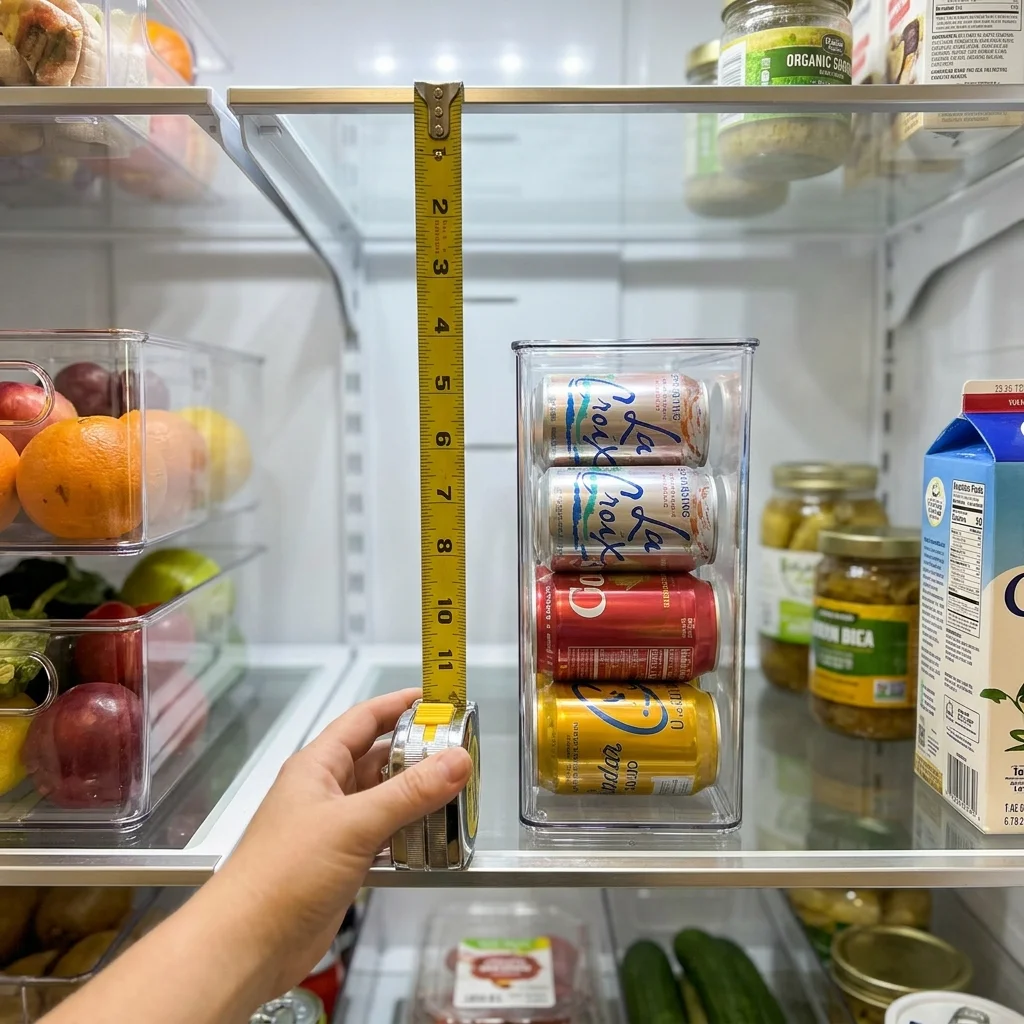
If you want to organize your refrigerator, measure the available height and width before buying a can dispenser.
A standard can is about 4.83 inches tall and 2.6 inches wide. However, the organizer needs additional clearance for easy access, and some shelves may have supports or raised edges that reduce the usable space.
For multiple cans, consider how they will sit side by side. Four standard cans placed in a straight row need approximately 10.4 inches of body width before allowing extra space between them.
2. Packaging and Shipping
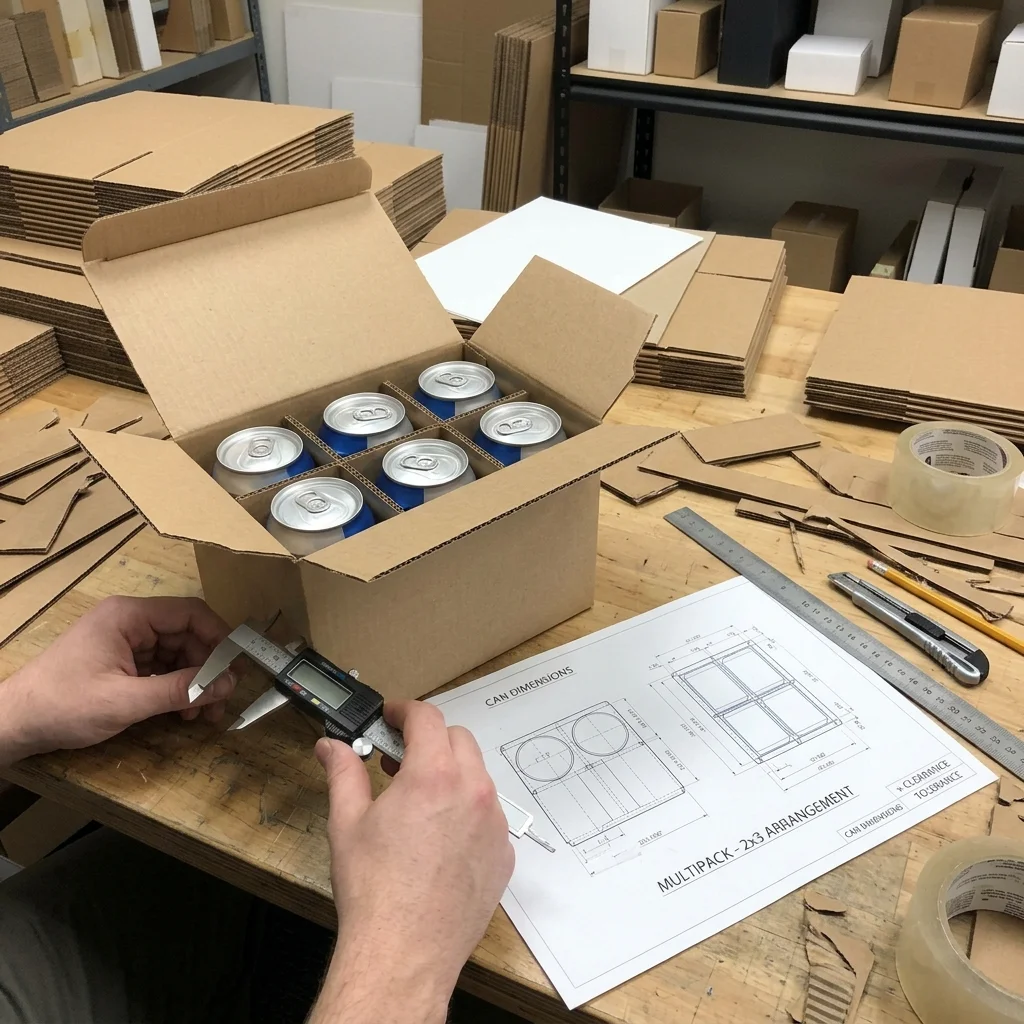
Packaging designers use can dimensions to determine the size of cartons, multipacks, and shipping boxes.
For example, a box holding six standard cans in two rows of three needs enough room for the combined widths, plus clearance and packaging material.
The final box dimensions also depend on how the cans are arranged, whether cardboard dividers are included, and how tightly the package must hold them.
Accurate measurements help prevent packaging from being unnecessarily large or too tight.
3. Label and Graphic Design
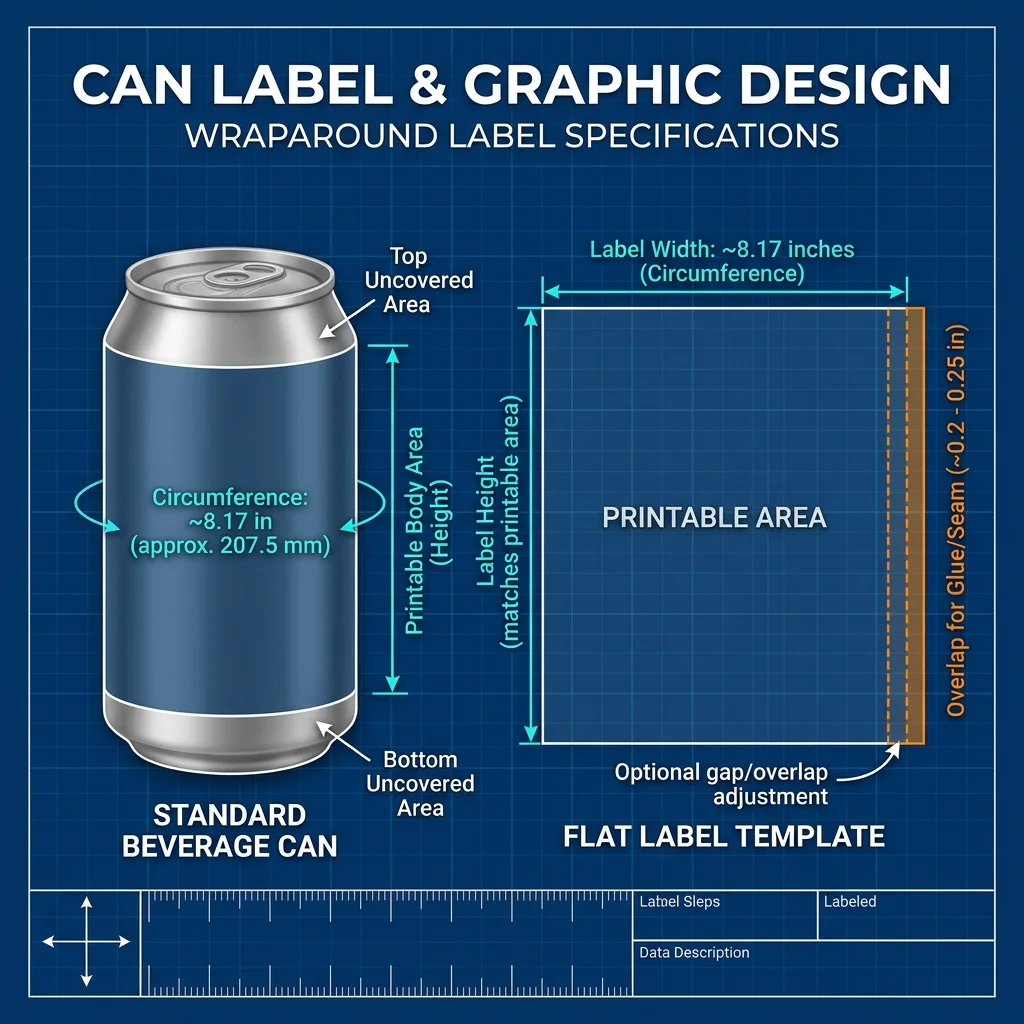
A wraparound label needs to match the circumference of the can and the height of the printable body area.
For a standard can, the circumference is approximately 8.17 inches. That figure provides a starting point for calculating the label’s width.
However, the label should not automatically cover the entire circumference or total can height. The design may require an overlap, a small gap, or uncovered areas near the curved top and bottom.
For commercial production, obtain the can manufacturer’s specifications or use a physical sample to check the final label fit.
4. Custom Can Holders
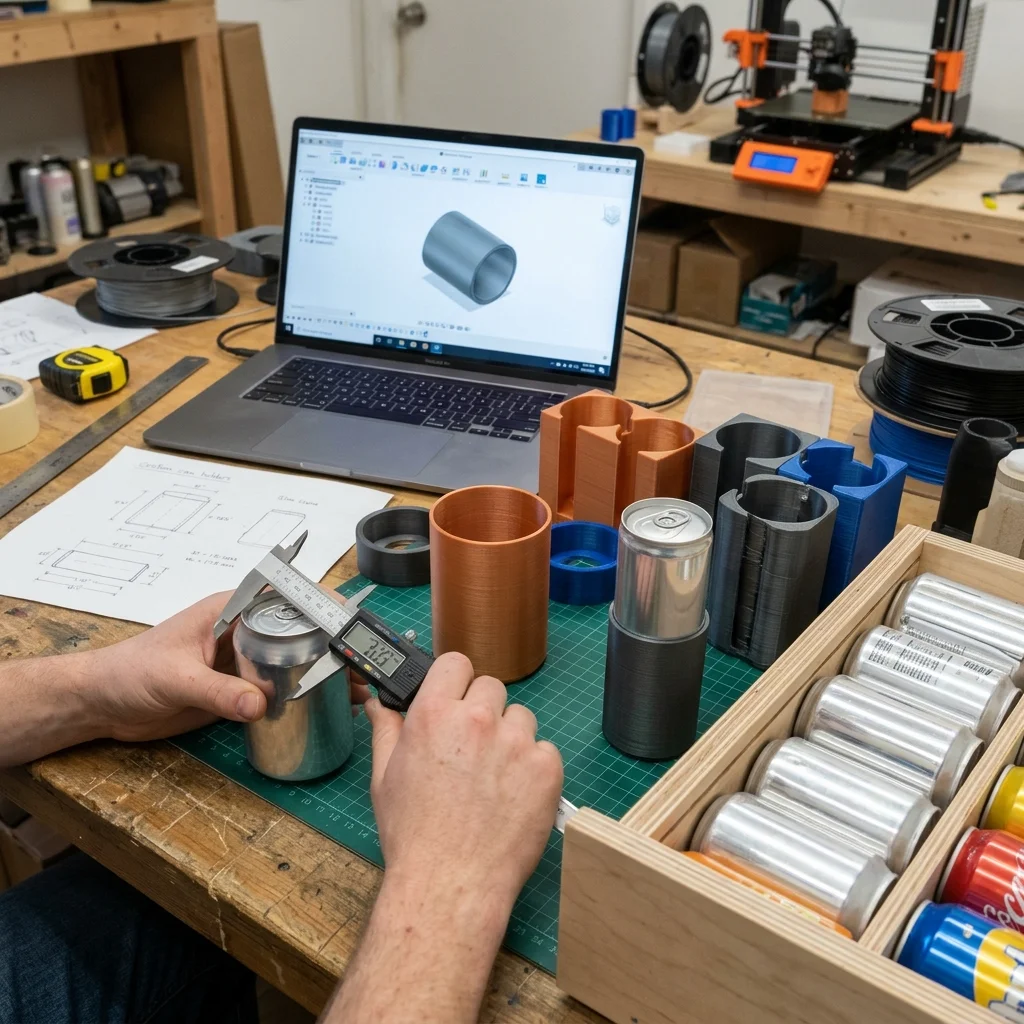
If you’re building a holder, drawer insert, or 3D-printed organizer, diameter is one of the most important measurements.
A holder designed for a standard-width can may not fit a slim can securely. Likewise, a narrow holder could make it difficult to insert or remove a can if its internal dimensions leave insufficient clearance.
Measure the widest section that needs to pass through the holder. Then allow for the thickness and flexibility of the holder material.
5. Retail Displays and Product Planning

Retailers need to understand product dimensions when arranging shelves and planning promotional displays.
The height determines vertical clearance, while the diameter affects how many cans fit across a shelf. These measurements also help maintain consistent spacing between products.
When several beverage sizes appear in one display, checking their actual dimensions helps create a more practical and balanced arrangement.
🧰 How to Measure a Soda Can at Home

You can measure a soda can with a ruler, measuring tape, or caliper. A ruler is usually sufficient for everyday purposes, while a caliper can provide a more precise diameter measurement.
Follow these steps:
Step 1: Measure the height.
Place the can upright on a flat surface. Measure from the bottom to the highest point of the top rim.
Step 2: Measure the body diameter.
Measure straight across the cylindrical body through its center. Avoid using the lid or the curved bottom as your reference point.
Step 3: Calculate the radius.
Divide the diameter by two. If the diameter is 2.6 inches, the radius is 1.3 inches.
Step 4: Calculate the circumference.
Multiply the diameter by pi, approximately 3.14159. A diameter of 2.6 inches produces a circumference of about 8.17 inches.
Step 5: Check the usable height.
If you are designing a label or sleeve, measure the straight body section separately. The full can height may include curved areas unsuitable for your design.
Step 6: Record the measurements in your preferred units.
Convert inches to centimeters by multiplying by 2.54. Multiply centimeters by 10 to obtain millimeters.
For a project that requires a precise fit, measure more than one can if possible. Small manufacturing differences can affect how products fit inside a tightly designed compartment.
📐 How Much Space Do Multiple Soda Cans Need?
The space required for multiple cans depends on their arrangement. For a quick estimate, multiply the can diameter by the number of cans placed in a straight row.
Using a diameter of 2.6 inches:
| Number of cans in a row | Approximate combined width |
|---|---|
| 1 can | 2.6 inches |
| 2 cans | 5.2 inches |
| 3 cans | 7.8 inches |
| 4 cans | 10.4 inches |
| 6 cans | 15.6 inches |
These figures do not include gaps between cans or extra room around the edges.
For example, three standard cans placed side by side need about 7.8 inches of combined body width. A practical shelf or compartment should allow additional clearance so you can place and remove them easily.
If the cans sit in staggered rows, the overall dimensions will differ. Always account for the arrangement and the usable internal space rather than relying only on the cans’ combined widths.
❓ Frequently Asked Questions About Soda Can Dimensions
1. How tall is a standard soda can?
A standard 12-ounce US soda can is approximately 4.83 inches tall, or 12.27 centimeters. The exact height can vary by manufacturer.
2. What is the diameter of a soda can?
The main body of a standard soda can is approximately 2.6 inches in diameter, equivalent to 6.6 centimeters.
3. How wide is a soda can in millimeters?
A typical standard can has a body diameter of about 66 millimeters. This measurement refers to the cylindrical body rather than the top opening.
4. What is the circumference of a standard soda can?
The approximate circumference is 8.17 inches, or 207.5 millimeters, when calculated using a body diameter of 2.6 inches.
5. How many ounces does a standard soda can hold?
A standard US soda can holds 12 US fluid ounces, equivalent to approximately 355 milliliters.
6. How tall is a 12-ounce soda can in centimeters?
A typical 12-ounce can stands about 12.27 centimeters tall. Actual dimensions may differ slightly between products.
7. Are all soda cans the same size?
No. Mini, standard, slim, tall, and large cans have different proportions. Even containers with the same capacity can have different heights and diameters.
8. How tall is a 16-ounce soda can?
Many 16-ounce beverage cans are around 6.2 inches tall. The exact height depends on the can design and manufacturer.
9. How tall is a 24-ounce beverage can?
Some 24-ounce beverage cans stand around 7.4 inches tall. Check the specific product if you need an accurate measurement for storage or packaging.
10. What is the radius of a standard soda can?
If the body diameter is 2.6 inches, its radius is 1.3 inches, or approximately 3.3 centimeters.
11. Is a soda can 3 inches wide?
A typical standard soda can is narrower than 3 inches. Its body diameter is approximately 2.6 inches, although other beverage containers may be wider.
12. Will a standard soda can fit in a cup holder?
That depends on the holder’s internal diameter and depth. A holder designed for a can around 2.6 inches wide may fit, but you should check its dimensions before relying on a precise fit.
13. Can I use soda can dimensions to design a label?
Yes. The circumference helps estimate the label width, and the usable straight-body height helps determine its height. For a production-ready label, verify the dimensions against the actual can.
14. What is the difference between soda can height and body height?
Total height includes the top and bottom ends. Body height refers to the main cylindrical section between the curved areas. The distinction matters when designing labels, sleeves, and holders.
15. How do I convert soda can dimensions from inches to centimeters?
Multiply the inch measurement by 2.54. For example, 4.83 inches equals approximately 12.27 centimeters, while 2.6 inches equals 6.6 centimeters.
Conclusion
Standard soda can dimensions provide a useful reference for everyday measurements, refrigerator organization, product packaging, and DIY projects. A typical 12-ounce US soda can stands approximately 4.83 inches tall, measures 2.6 inches in body diameter, and has a circumference of about 8.17 inches. Its capacity is approximately 355 milliliters.
Smaller cans, slim cans, and larger beverage containers use different proportions, so capacity alone cannot tell you their exact external dimensions.
For general comparisons, these standard measurements are usually sufficient. If you’re designing a label, building a holder, or planning a close-fitting storage space, measure the actual can and allow suitable clearance. That small extra step can help ensure your finished project fits as intended.

Aiden Cross is a passionate writer dedicated to exploring creativity, style, and modern trends through engaging and informative content. His goal is to provide readers with practical insights and fresh perspectives.