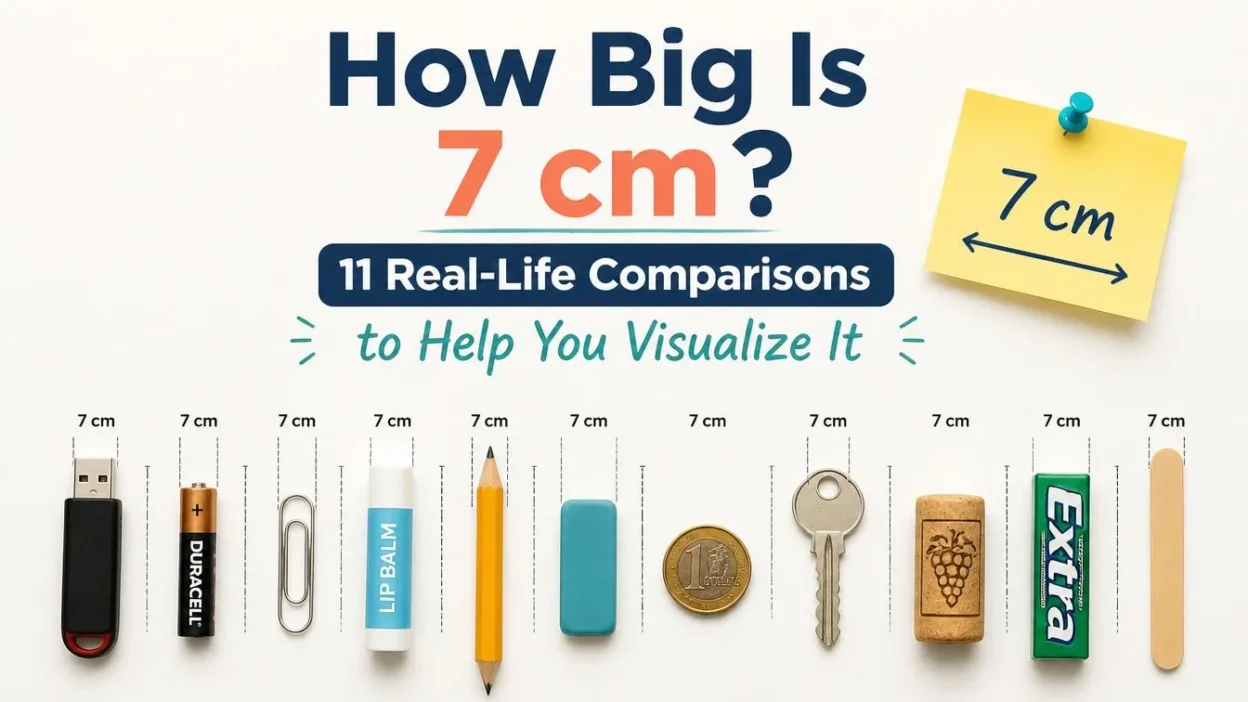
Have you ever seen a product online that measures 7 centimeters and struggled to imagine its actual size? You are not alone. Numbers on a product page can be difficult to picture, especially when you are more familiar with inches than centimeters.
A measurement might look small when written down, but how does it compare with something you use every day? Would it fit comfortably in your palm? Is it close to the width of your phone? And how much difference is there between 7 centimeters and 3 inches?
The easiest way to answer these questions is to compare the measurement with familiar objects. A tennis ball, a smartphone, and a few American coins can all help you develop a clearer mental picture. You can also use a ruler, a simple conversion formula, or a few practical estimating techniques.
Seven centimeters equals 70 millimeters or approximately 2.76 inches. That makes it slightly shorter than 3 inches and just a little longer than 2¾ inches.
In this guide, you will discover 11 useful real-life comparisons, learn how this length differs from nearby measurements, and find out how to estimate it when a ruler is not available.
How Big Is 7 cm in Inches?
Seven centimeters is equal to approximately 2.7559 inches. Rounded to two decimal places, the result is 2.76 inches.
For a quick mental estimate, imagine a length that falls just beyond the 2¾-inch mark on an inch ruler. It is close to 3 inches, but there is still a noticeable difference between the two.
Here is a quick conversion chart:
| Measurement unit | Equivalent |
|---|---|
| Centimeters | 7 cm |
| Millimeters | 70 mm |
| Inches | 2.7559 in |
| Inches, rounded | 2.76 in |
| Meters | 0.07 m |
| Feet | 0.2297 ft |
| Yards | 0.0766 yd |
These conversions are useful when shopping online, reading international product descriptions, following craft instructions, or comparing dimensions listed in different units.
How to Convert Centimeters to Inches
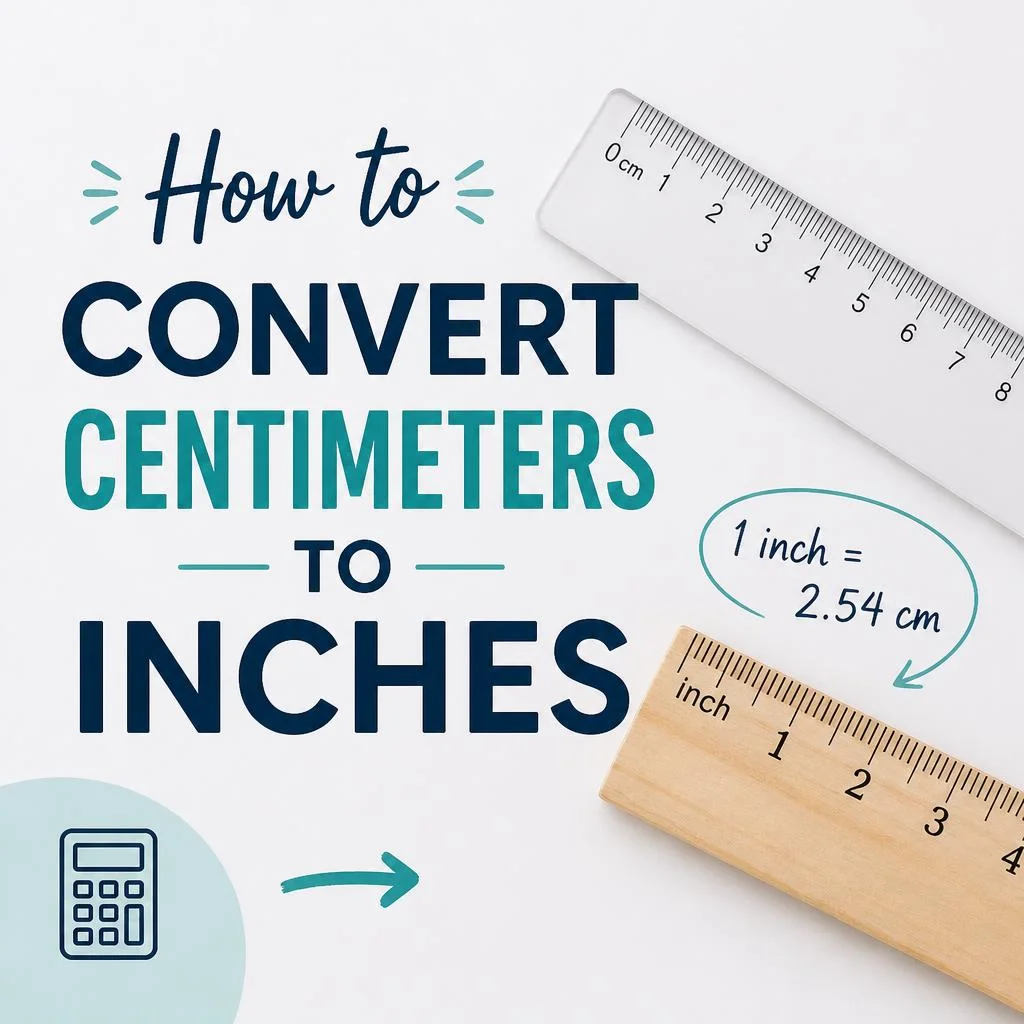
The conversion is straightforward because one inch is defined as exactly 2.54 centimeters.
To convert centimeters into inches, divide the centimeter value by 2.54.
Formula:
Inches = Centimeters ÷ 2.54
For this measurement:
7 ÷ 2.54 = 2.7559 inches
You can reverse the calculation to convert inches into centimeters by multiplying the inch value by 2.54.
For example, 3 inches multiplied by 2.54 equals 7.62 centimeters. That means 3 inches is 0.62 cm longer than the measurement discussed here.
What Does 7 Centimeters Look Like in Real Life?
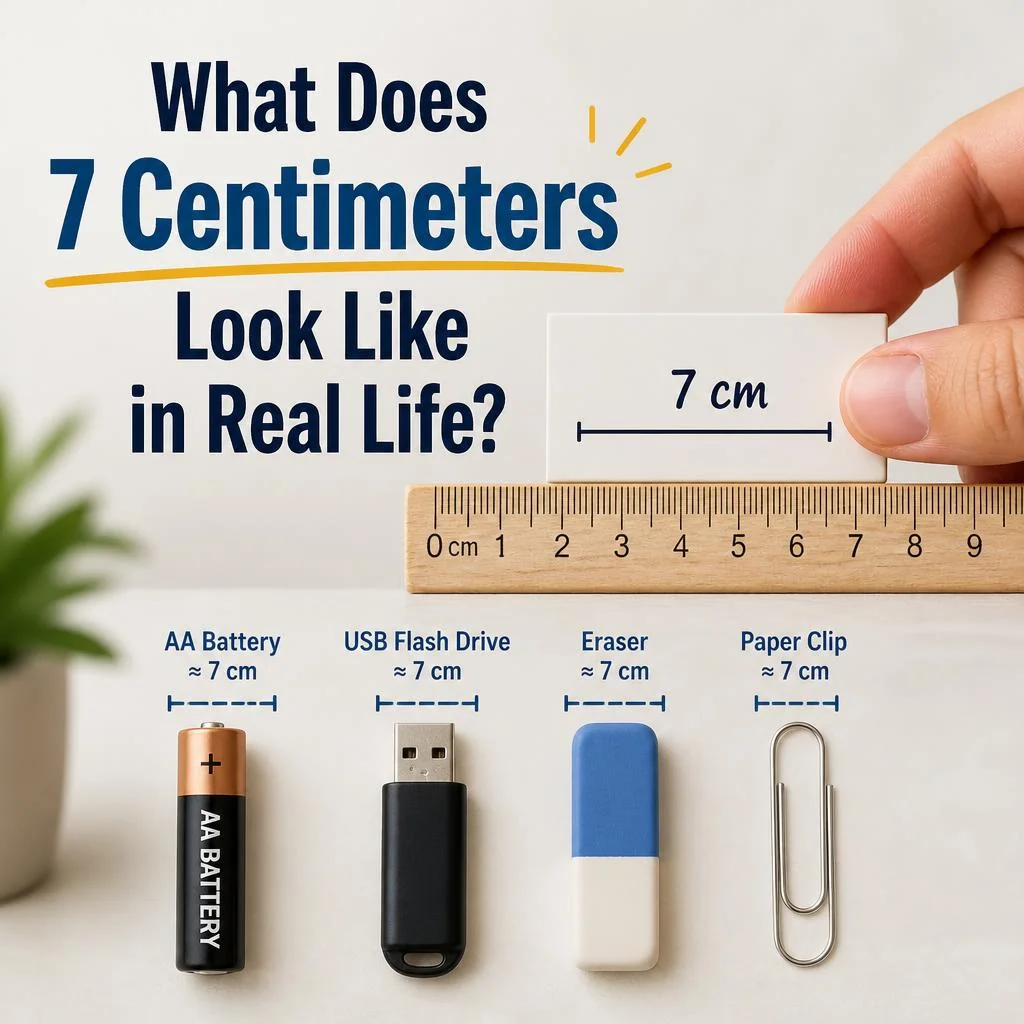
A number becomes much easier to understand when you connect it with an object you already recognize. However, there is an important distinction between an object that is approximately this size and one that measures exactly 70 mm.
Everyday objects vary by brand, model, and design. The comparisons below are therefore useful visual references, not universal measurements for every version of an item.
1. Almost the Diameter of a Tennis Ball
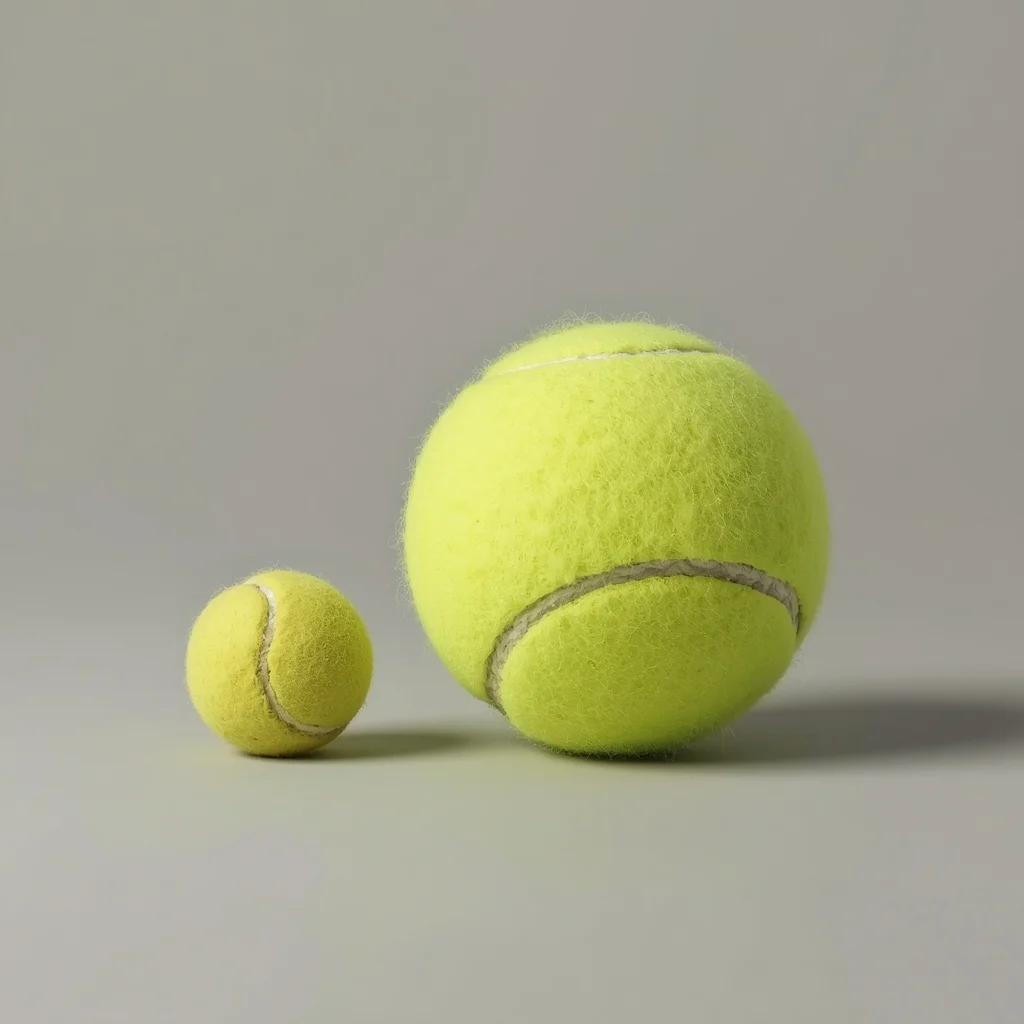
<text size=”sm” color=”secondary”>A close comparison for understanding a small circular measurement.</text>
A standard tennis ball has a diameter of approximately 6.5 to 6.9 centimeters, depending on its specifications. That places it close to the target length.
Imagine holding a tennis ball and looking straight across its widest point. The distance from one side to the other is nearly the same as the measurement you are trying to visualize.
This comparison works particularly well because a tennis ball is familiar, easy to hold, and reasonably consistent in size.
Remember that diameter and circumference are different measurements. Diameter is the straight-line distance across the center of the ball, while circumference is the distance around its outside.
Try this: Hold a tennis ball next to a ruler and look at the centimeter markings across its widest point. You will see how closely its diameter approaches 7 cm.
2. Close to the Width of an iPhone 15
A smartphone is another convenient reference because many people carry one throughout the day.
For example, the iPhone 15 is approximately 7.16 centimeters wide. That makes its shorter edge only 1.6 millimeters wider than the target measurement.
Turn the phone sideways and look at the distance from its left edge to its right edge. That dimension provides a useful reference for imagining a length of 7 centimeters.
However, not every phone will be this close. Some compact smartphones are narrower, while larger models can be substantially wider. Phone cases can also add a little extra width.
If you know your phone’s published dimensions, it may be one of the most convenient measuring references available to you.
Best use: Estimating the width of small electronics, accessories, and compact household products.
3. Three US Quarters Placed Side by Side

If you live in the United States, quarters offer another practical way to understand a short measurement.
A US quarter has a diameter of approximately 24.26 millimeters. Place three quarters in a straight line, with their edges touching, and their combined length will be approximately 72.78 millimeters, or 7.28 centimeters.
That is slightly longer than 7 cm.
This makes three quarters a helpful comparison when you want to estimate the length without using a ruler. The row of coins gives you a visible reference that is easy to recreate on a table or desk.
For the most accurate comparison, line up the coins carefully and avoid overlapping them. Small gaps between coins can change the total length.
Keep in mind: The combined measurement is the sum of the three coin diameters. Stacking the coins would change their height, not their side-by-side length.
4. Slightly Wider Than the Body of Many Soda Cans

A standard American soda can is often around 6.5 to 6.7 centimeters across its cylindrical body, although dimensions vary by manufacturer and can design.
That means a 7 cm measurement is a little wider than the body of many familiar beverage cans.
To make this comparison, imagine looking down at the can from above. The straight-line distance across the circular body is its diameter. Do not confuse this with the can’s height, which is much greater.
This is a useful example because a soda can is easy to find in a kitchen, refrigerator, or grocery store. It also shows how a difference of only a few millimeters can change the apparent size of a circular object.
5. A Little Smaller Than a Baseball’s Diameter
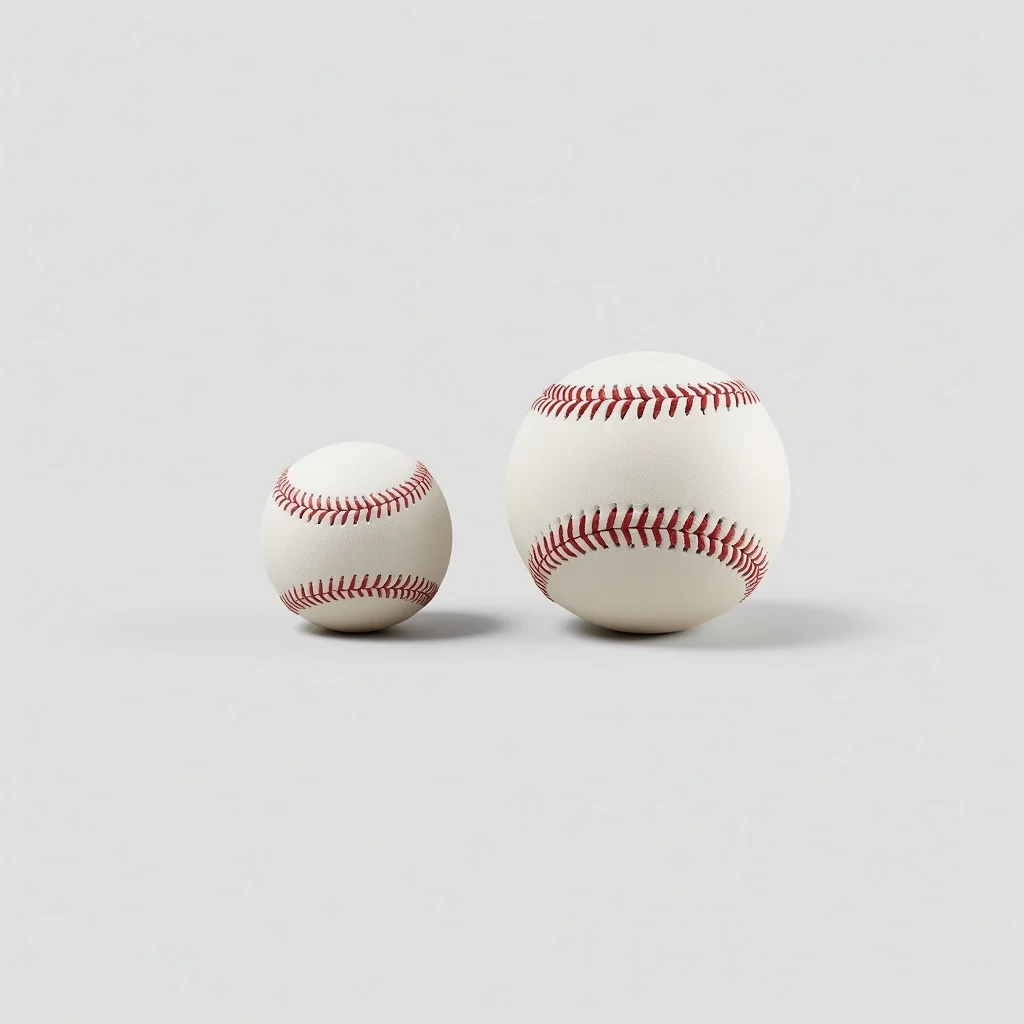
A regulation baseball is generally around 7.3 to 7.5 centimeters in diameter. It is therefore slightly larger than the measurement in this guide.
Picture a baseball resting in your hand. Its width gives you an approximate upper reference: 7 cm would be a little shorter than the distance across the ball.
This comparison is especially helpful if you enjoy baseball or have sports equipment at home. The ball’s round shape makes it easy to understand the difference between a diameter of roughly 7 cm and one that is closer to 7.5 cm.
A baseball should not be described as exactly 7 cm across, though. Its standard dimensions make it a close comparison rather than an exact match.
6. A Short Length on a Standard Inch Ruler
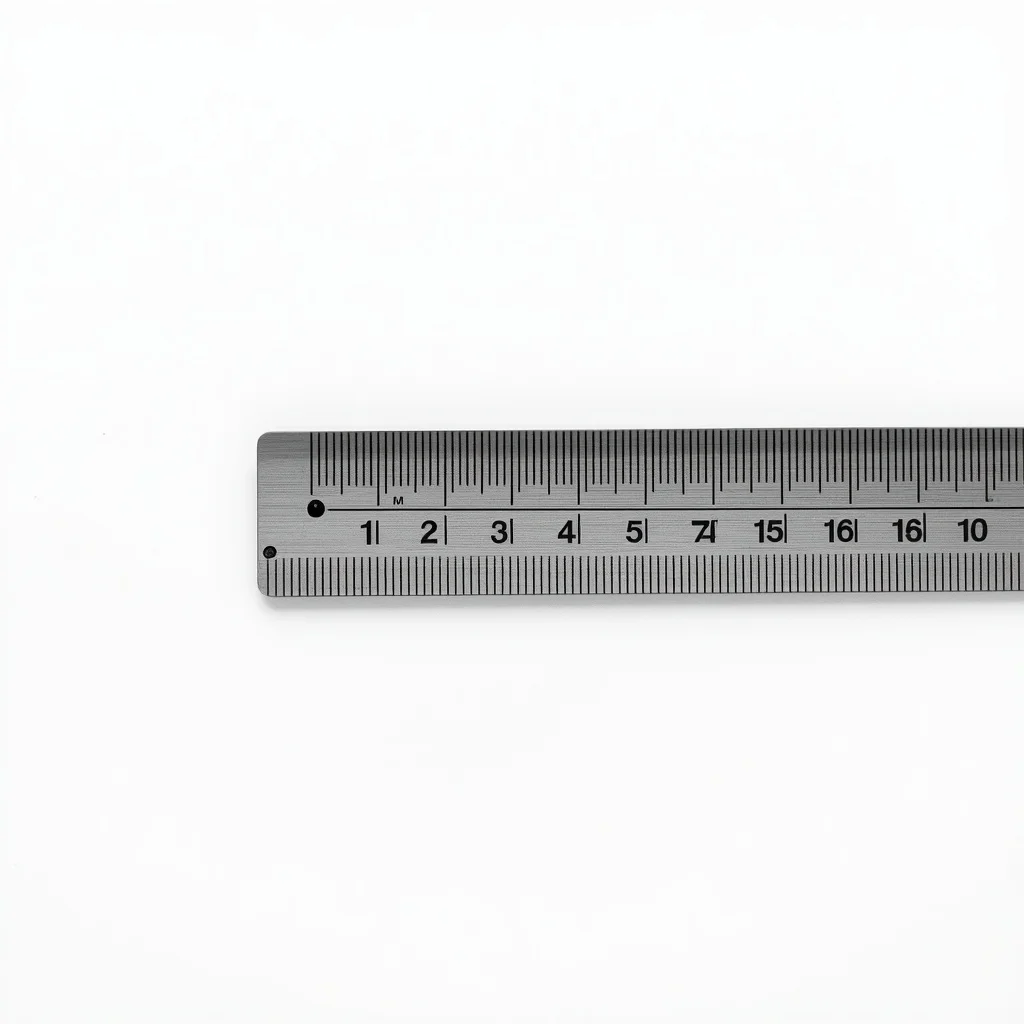
Sometimes the simplest reference is the most useful.
On a ruler marked in inches, the target length falls just beyond 2¾ inches. It remains slightly shorter than the 3-inch mark.
On a metric ruler, the same distance runs from the zero mark to the 7 cm line.
Looking at both scales side by side can help you become more comfortable switching between metric and imperial measurements. This is particularly useful when product specifications use centimeters but your measuring tools are marked in inches.
7. A Small Round Cookie Cutter

Round cookie cutters are commonly sold in different diameters, including sizes around 70 mm. If you have a cutter labeled 7 cm or 70 mm, its diameter provides a direct comparison.
Place it flat on a table and measure straight across the opening. The distance should match the labeled diameter, assuming the specification refers to the cutting diameter.
This example is useful for home bakers because cookie cutters are designed around specific dimensions. They can also help you visualize the diameter of small craft discs, circular labels, and decorative pieces.
Check the product listing before relying on a particular cutter as a reference. A cutter that looks similar may actually be 6 cm, 8 cm, or another size.
8. A Round Wooden Craft Disc

Wooden craft discs are often available in standardized diameters for painting, engraving, ornaments, and other DIY projects.
A disc labeled 70 mm across offers a straightforward way to picture the measurement. Its flat, rigid shape makes it easier to compare with other objects than a soft or irregular item would be.
You might use a similar disc for handmade decorations, personalized signs, or classroom projects. The circular outline clearly shows how much surface a 7 cm diameter covers.
Remember that diameter only describes the width across the disc. Its thickness is a separate dimension and may be much smaller.
9. A 70 mm Hole Saw

For a more technical example, consider a hole saw with a specified cutting diameter of 70 mm.
Hole saws are used with compatible power tools to create circular openings in materials such as wood and drywall. The diameter is an important specification because the opening needs to fit the intended application.
A genuine 70 mm model provides a precise manufactured reference for this length. Unlike a hand or an irregular natural object, its cutting diameter is defined by the product specification.
This comparison is particularly useful for DIY enthusiasts and people working on home improvement projects.
Always check the manufacturer’s dimensions and use tools according to their safety instructions. A hole saw is a technical reference, not something to handle casually by its cutting edge.
10. A Small Jar Seal or Circular Lid

Some jar seals, replacement rings, and circular lids are sold in sizes around 70 mm. These can be useful examples when you are comparing household items.
However, a jar’s advertised size may refer to its opening, lid, or thread specification rather than its outside diameter. Two parts labeled for the same jar may therefore have different physical measurements.
If you want to use a lid as a reference, measure the actual dimension you are comparing. For a diameter of 7 cm, measure straight across the circular part from edge to edge through its center.
This is a good reminder that a product’s label does not always tell you which dimension is being measured.
11. A Small Round Metal Disc
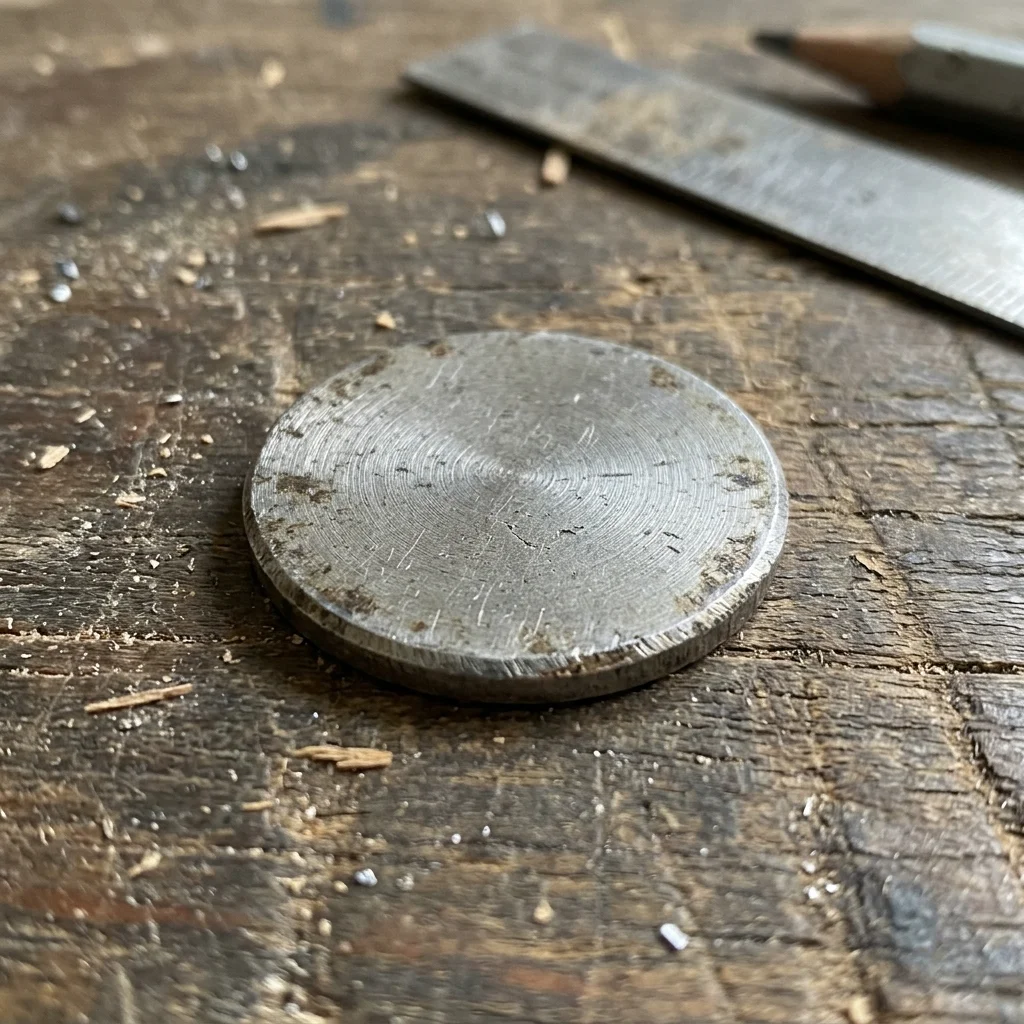
A metal disc manufactured to a 70 mm diameter is another exact-size reference. Such discs may be used in craft projects, fabrication, engineering, or other applications where a defined dimension is important.
Because the disc is rigid and circular, you can compare its diameter directly with the measurement on a ruler.
Unlike comparisons involving hands, sports balls, or beverage cans, a correctly specified disc can provide a precise reference. Still, check whether the listed size refers to the diameter, since thickness and other dimensions will be different.
How Does 7 cm Compare With 6 cm, 8 cm, and 10 cm?
Comparing nearby measurements helps you understand not only the length itself but also how much difference a few centimeters make.
| Measurement | Inches | Difference from 7 cm |
|---|---|---|
| 5 cm | 1.97 in | 2 cm shorter |
| 6 cm | 2.36 in | 1 cm shorter |
| 7 cm | 2.76 in | Reference measurement |
| 8 cm | 3.15 in | 1 cm longer |
| 9 cm | 3.54 in | 2 cm longer |
| 10 cm | 3.94 in | 3 cm longer |
6 cm vs. 7 cm
The difference is just 1 centimeter, or 10 millimeters. That may not sound like much, but it can be noticeable when comparing small circular objects or accessories.
For example, a 7 cm disc is visibly wider than a 6 cm disc when placed beside it.
7 cm vs. 8 cm
An 8 cm length is approximately 3.15 inches, which is longer than 3 inches. Compared with 7 cm, it adds another centimeter.
The difference is easy to see when you place two rulers or strips of paper beside each other and align one end.
7 cm vs. 10 cm
Ten centimeters equals approximately 3.94 inches, which is close to 4 inches. It is 3 cm longer than the measurement discussed here.
This is a more noticeable difference. An object measuring 10 cm will extend considerably farther along a ruler than one measuring 7 cm.
How to Measure 7 cm Without Making Common Mistakes
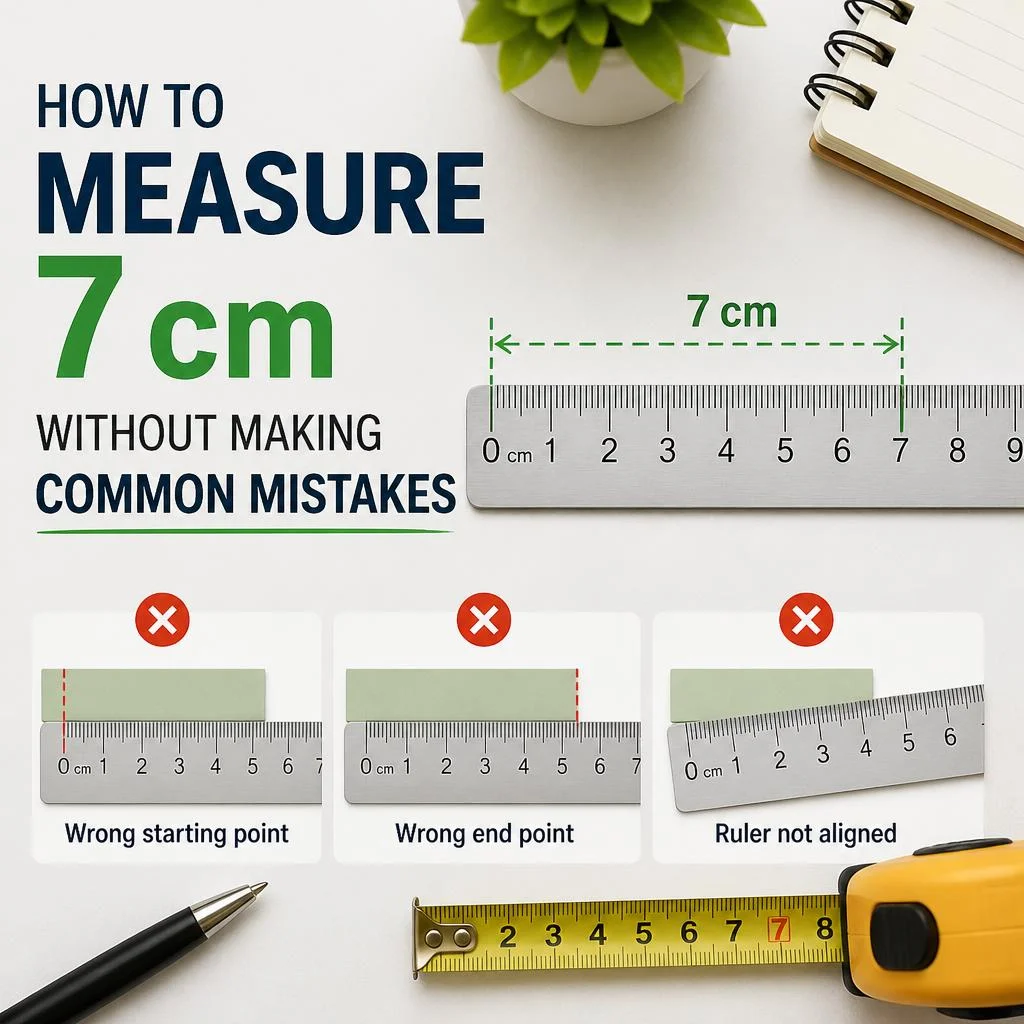
If you need a reasonably accurate measurement, a ruler or measuring tape is the best choice. But understanding how to use it correctly matters just as much as having one.
Step 1: Start at the Zero Mark
Place one end of the object at the ruler’s zero mark, not necessarily at the physical edge of the ruler.
Some rulers have a small gap between the edge and the printed zero line. Starting at the wrong point can introduce an error.
Step 2: Find the 7 cm Mark
Follow the centimeter scale until you reach the line labeled 7. The distance from zero to that mark is 7 centimeters.
Each centimeter is divided into 10 millimeters on a standard metric ruler. That means the distance contains 70 millimeters.
Step 3: Measure the Correct Dimension
Decide whether you need the length, width, height, or diameter.
For a rectangular object, length and width describe different sides. For a circular object, diameter means the distance across its center, while circumference means the distance around its outside.
Using the wrong dimension is a common reason people misjudge product sizes.
Step 4: Check Your Result
For important measurements, repeat the process once. If you are measuring an item for a specific space, also check the manufacturer’s instructions and any clearance requirements.
An estimate may be sufficient for visualization, but precise fitting requires a real measurement.
How to Estimate This Length Using Everyday Items
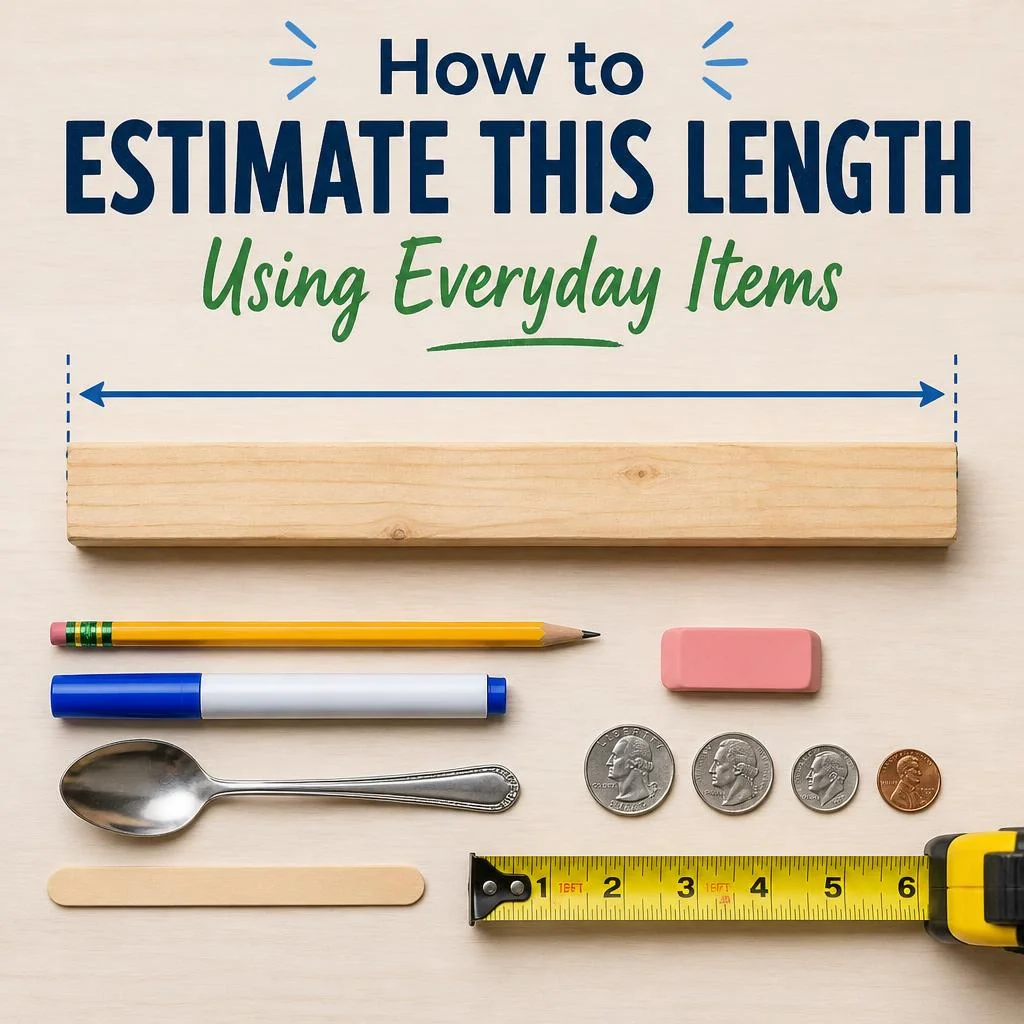
If you do not have a ruler nearby, you can still make an informed estimate.
Use your smartphone. If its published width is close to 7 cm, the shorter edge can serve as a convenient reference. Remember to account for any protective case.
Use three quarters. Three US quarters in a straight line measure approximately 7.28 cm, giving you a reference that is slightly longer than the target.
Compare with a tennis ball. Its diameter is close to 7 cm, making it useful for a rough visual estimate.
Calibrate your hand. Finger widths and hand proportions vary from person to person. If you measure your hand once with a ruler, you may be able to use it for rough estimates later.
Use a paper strip. If you have access to any ruler, mark 7 cm on a strip of paper. You can keep that strip as a reusable reference for future comparisons.
These methods are useful for estimating sizes while shopping or working on a casual project. They should not replace accurate measuring tools when a few millimeters matter.
Why Understanding Centimeters Is Useful
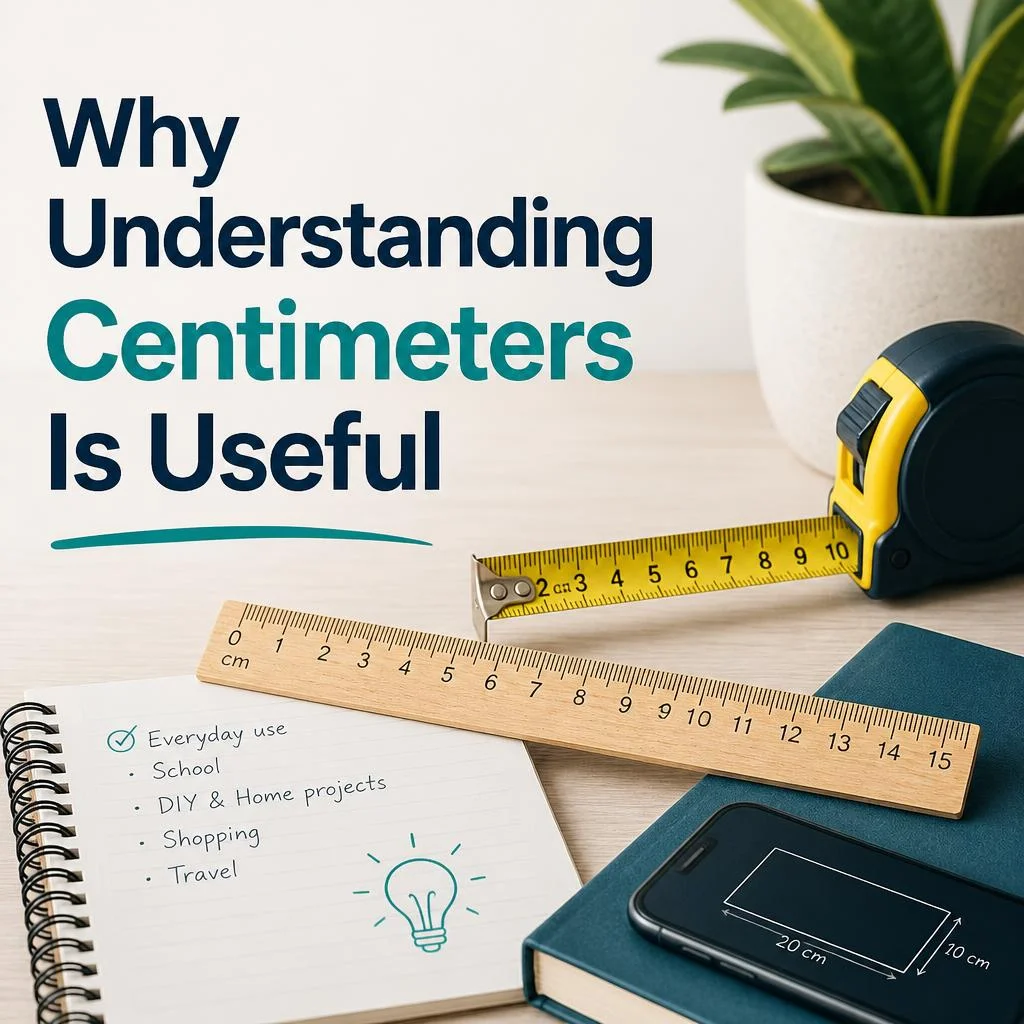
Many products sold in the United States list dimensions in inches, but imported goods and international product listings often use centimeters or millimeters.
Knowing how to visualize a short metric measurement can help you compare product sizes before placing an order. It can also help with baking, crafts, home improvement, school projects, and other everyday activities.
The key is to remember that one dimension does not describe an entire object. A product measuring 7 cm wide could be 2 cm tall or 20 cm long. Always check the full dimensions when space, fit, or compatibility matters.
It is also worth distinguishing between approximate comparisons and exact specifications. A tennis ball can help you picture the scale, while a verified 70 mm disc gives you a more precise reference.
Frequently Asked Questions
Is 7 cm the same as 3 inches?
No. Seven centimeters equals approximately 2.76 inches, while 3 inches equals 7.62 centimeters. Three inches is 0.62 cm longer.
Is 7 cm bigger than 2 inches?
Yes. Two inches equals 5.08 cm, so the 7 cm measurement is 1.92 cm longer.
How many millimeters are in 7 centimeters?
There are exactly 70 millimeters in 7 centimeters. One centimeter always equals 10 millimeters.
What common object is closest to 7 cm?
A tennis ball is a close comparison because its diameter is generally around 6.5 to 6.9 cm. Some smartphones are also close in width, depending on their model.
Can I measure 7 cm with my fingers?
You can estimate it using your fingers, but the result will vary with your hand size. For a better estimate, compare your hand with a ruler first.
Is 7 cm considered small?
It is a relatively short measurement compared with many household objects. However, it can be a substantial dimension for a small accessory, craft item, or circular component.
How do I write seven centimeters in millimeters?
Write it as 70 mm. Both measurements describe exactly the same length.
Is 7 cm long enough for a small accessory?
That depends on the accessory and its intended purpose. Seven centimeters may work well for a small decorative item or compact component, but you should check the product’s complete dimensions before purchasing it.
Final Thoughts
A measurement becomes much easier to understand when you compare it with objects you already know. At 70 millimeters, this length is approximately 2.76 inches, placing it just below the 3-inch mark.
A tennis ball provides a close diameter comparison, a smartphone can offer a convenient width reference, and three US quarters placed side by side measure slightly more than the target. For a precise reference, a product specifically labeled 70 mm is the better option.
The most important lesson is to pay attention to which dimension you are comparing. Length, width, height, diameter, and circumference are not interchangeable.
Once you have a few reliable references in mind, estimating small measurements becomes much easier. And whenever the exact fit matters, use a ruler or measuring tape rather than relying on appearance alone.

Aiden Cross is a passionate writer dedicated to exploring creativity, style, and modern trends through engaging and informative content. His goal is to provide readers with practical insights and fresh perspectives.